



Introduction:
In an era where software products define customer experience, operational efficiency, and market differentiation, Software Product Engineering has become a strategic capability for enterprises. It goes beyond development to encompass architecture, scalability, quality, security, and continuous evolution of software products.
Organizations that treat software as a long-term product—rather than a one-time project—are better positioned to innovate, scale, and sustain competitive advantage.
What Is Software Product Engineering?
Software Product Engineering is a structured approach to designing, building, testing, deploying, and continuously enhancing software products across their entire lifecycle.
It focuses on:
- Engineering products for scalability and performance
- Ensuring long-term maintainability
- Embedding quality and security from the start
- Aligning technology decisions with business strategy
Unlike traditional software development, software product engineering emphasizes product ownership and lifecycle thinking.
Key Pillars of Software Product Engineering
1. Product-Centric Engineering Mindset
At its core, software product engineering treats software as a living product.
This mindset includes:
- Continuous feature evolution
- User feedback-driven improvements
- Performance and usability optimization
- Ongoing technical enhancements
Engineering decisions are made with long-term product value in mind.
2. Scalable Software Architecture
Architecture is foundational to product success.
Core architectural principles include:
- Modular and microservices-based design
- API-first and integration-ready systems
- Cloud-native and containerized deployments
- High availability and fault tolerance
Scalable architecture enables products to grow without re-engineering.
3. Agile Software Development Practices
Modern software product engineering relies on:
- Agile and iterative development
- Cross-functional teams
- Continuous integration and delivery
- Rapid feedback loops
This ensures faster innovation while maintaining stability and quality.
4. Integrated Quality Engineering
Quality is embedded throughout the lifecycle.
Key quality practices include:
- Test automation at multiple levels
- Continuous regression testing
- Performance and load validation
- Security testing and vulnerability assessments
This approach minimizes defects and ensures production-ready software.
5. Deployment, Monitoring, and Optimization
Post-launch engineering is equally critical.
Activities include:
- CI/CD pipeline management
- Application performance monitoring
- Observability and logging
- Cost and resource optimization
These practices ensure software products remain reliable and efficient in real-world use.
Why Enterprises Invest in Software Product Engineering
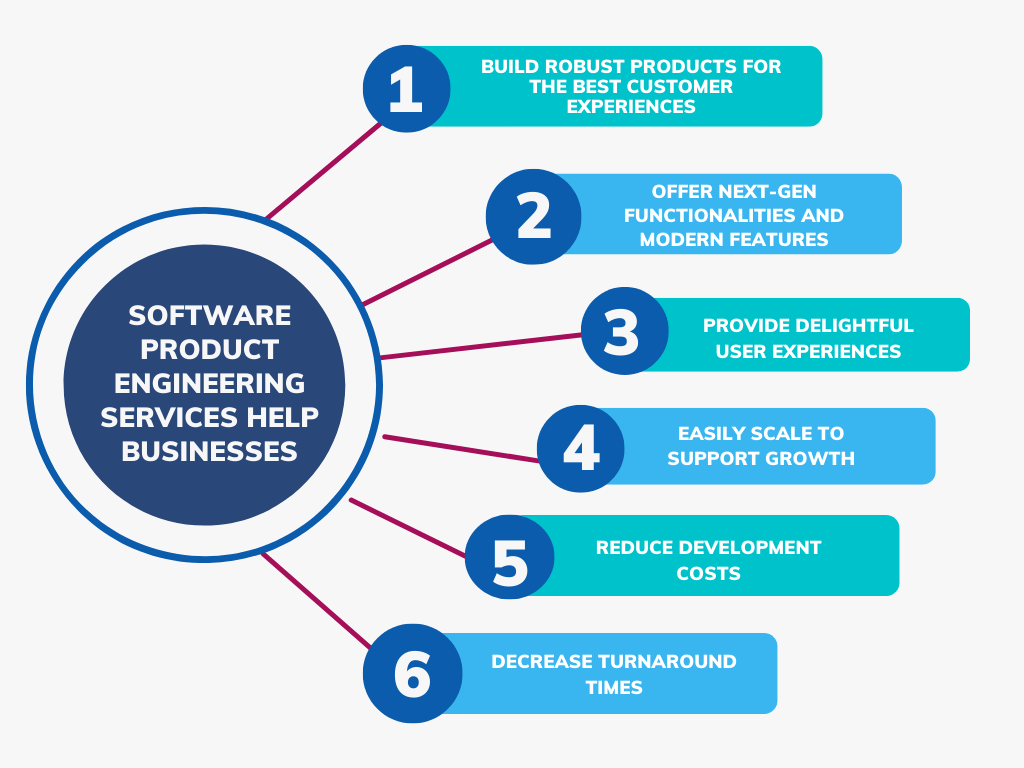
Enterprises adopt software product engineering to:
- Reduce time-to-market
- Improve product quality and reliability
- Scale products efficiently
- Modernize legacy software
- Support continuous innovation
It enables organizations to respond faster to market changes and customer needs.
Software Product Engineering vs Traditional Development
| Dimension | Traditional Development | Software Product Engineering |
|---|---|---|
| Focus | Project delivery | Product lifecycle |
| Architecture | Short-term | Long-term scalable |
| Quality | Post-development | Embedded throughout |
| Ownership | Client-led | Shared accountability |
| Innovation | Reactive | Continuous |
Use Cases for Software Product Engineering
- SaaS and platform products
- Enterprise software systems
- Customer-facing digital products
- Industry-specific software solutions
- Legacy product modernization
Each use case benefits from structured, lifecycle-driven engineering.
Business Benefits of Software Product Engineering
Faster Innovation Cycles
Iterative engineering accelerates feature releases.
Reduced Technical Debt
Architecture-first design prevents long-term complexity.
Improved Product Stability
Continuous testing enhances reliability.
Lower Total Cost of Ownership
Efficient engineering reduces maintenance overhead.
Future-Ready Products
Software evolves with technology and business demands.
Technologies Powering Software Product Engineering
- Cloud-native platforms
- Microservices and APIs
- DevOps and CI/CD tools
- Automation and testing frameworks
- Data analytics and monitoring tools
These technologies enable high-performing, scalable software products.
Selecting the Right Software Product Engineering Partner
An effective partner brings:
- Deep software engineering expertise
- Product-focused delivery models
- Domain and industry knowledge
- Mature DevOps and QA practices
- Scalable global delivery capabilities
The right partner works as a co-owner of the software product.
Future Trends in Software Product Engineering
The future will be shaped by:
- AI-assisted development
- Intelligent test automation
- Cloud-native and serverless architectures
- Data-driven product optimization
Organizations that embrace these trends will build resilient and adaptive software products.
Conclusion: Engineering Software Products for Long-Term Success
Software product engineering empowers enterprises to build scalable, secure, and high-quality software products that evolve with market demands. By adopting a lifecycle-driven engineering approach, organizations move beyond delivery to achieve sustained digital success.
FAQs
1. How is software product engineering different from software development?
Software product engineering focuses on the entire lifecycle of a product, not just development and delivery.
2. Is software product engineering suitable for legacy products?
Yes. It includes modernization, re-architecture, and performance optimization.
3. Does software product engineering support continuous improvement?
Absolutely. Continuous enhancement is a core principle of product engineering.
