



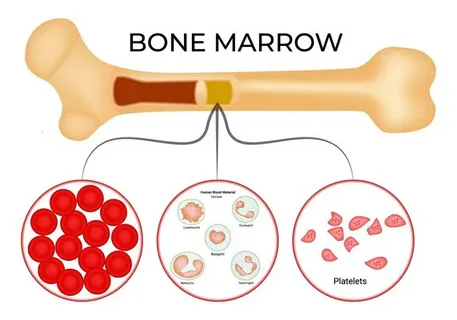
Myelodysplastic Syndromes (MDS) are a group of diverse bone marrow disorders that have long perplexed the medical community. Often referred to historically as “pre-leukemia,” this terminology fails to capture the complexity and immediate severity of the condition. In MDS, the bone marrow, the spongy tissue inside our bones responsible for producing blood cells, becomes dysfunctional. It produces immature, defective cells that often die before they even leave the marrow, leading to a critical shortage of healthy red blood cells, white blood cells, and platelets in the bloodstream. While supportive care can manage symptoms, the only potential cure for this progressive disease lies in replacing the defective machinery entirely. This is achieved through Allogeneic Hematopoietic Stem Cell Transplantation, a procedure that places STEM CELL Myelodysplastic Syndrome protocols at the forefront of curative hematology.
The Pathology of Ineffective Hematopoiesis
To appreciate the necessity of a transplant, one must understand the cellular chaos occurring within an MDS patient. In a healthy individual, hematopoietic stem cells mature in an orderly fashion into functional blood cells. In MDS, genetic mutations occur in these stem cells. These mutations prevent the cells from maturing properly, resulting in “dysplasia” abnormal looking and functioning cells.
Instead of entering the bloodstream to perform their vital duties, these defective cells undergo apoptosis (programmed cell death) within the marrow itself. This phenomenon, known as “ineffective hematopoiesis,” leads to cytopenias low blood counts. The patient is left vulnerable: anemia causes profound fatigue, neutropenia invites severe infections, and thrombocytopenia leads to easy bleeding. Furthermore, because the stem cells are unstable, there is a persistent risk that the disease will transform into Acute Myeloid Leukemia (AML), a rapidly progressing cancer that is much harder to treat.
The Curative Logic of Transplantation
Standard treatments for MDS, such as hypomethylating agents or growth factors, aim to coax the marrow into producing more cells or to kill the abnormal clones. However, these are often temporary measures. Eventually, the disease may become resistant.
An allogeneic stem cell transplant (SCT) offers a different approach. It is not a patch; it is a replacement. By infusing healthy stem cells from a compatible donor, the procedure aims to completely eradicate the patient’s diseased marrow and re-seed the bone cavities with a new, healthy immune system. This new system not only produces normal blood cells but also provides a “Graft-Versus-Leukemia” (GVL) effect, where the donor’s immune cells recognize and destroy any remaining malignant cells in the patient.
Institutions specializing in complex blood disorders, such asLiv Hospital, utilize rigorous risk stratification models like the IPSS-R (Revised International Prognostic Scoring System) to determine the optimal timing for this intervention.
The Donor Search: A Quest for Compatibility
Because MDS is a disease of the stem cell itself, an autologous transplant (using the patient’s own cells) is rarely effective, as the patient’s cells are the source of the problem. Therefore, finding a healthy donor is paramount.
Success hinges on Human Leukocyte Antigen (HLA) matching. These antigens are proteins on the surface of cells that the immune system uses to identify “self” vs. “non-self.”
- Matched Sibling Donor: A brother or sister with the same parents has a 25% chance of being a perfect HLA match.
- Matched Unrelated Donor (MUD): If no sibling match is found, registries of millions of volunteers are searched.
- Haploidentical Donor: Recent advances allow for the use of “half-matched” donors, typically children or parents, expanding curative options to nearly everyone.
The Transplant Protocol: Intensity and Precision
The transplant process is a multi-stage clinical journey.
- Conditioning: Before receiving the new cells, the patient undergoes a conditioning regimen. This involves chemotherapy and sometimes radiation.
- Myeloablative Conditioning: High-dose chemotherapy designed to wipe out the marrow completely. This is used for younger, fitter patients.
- Reduced-Intensity Conditioning (RIC): Lower doses are used to suppress the immune system enough to accept the donor cells, relying more on the GVL effect to clear the disease. This “mini-transplant” approach has made the procedure viable for older patients (up to 70-75 years old) who previously would not have been candidates.
Infusion: The donor cells are infused intravenously.
Engraftment: The critical waiting period where the new cells find their way to the marrow and begin production.
Risks and Management: Graft-Versus-Host Disease
The most significant hurdle in allogeneic transplantation is Graft-Versus-Host Disease (GVHD). This occurs when the donor’s immune cells perceive the patient’s healthy tissues (skin, liver, gut) as foreign and attack them. Acute GVHD can be severe, but modern prophylactic drugs effectively reduce its incidence. Interestingly, a mild form of GVHD is sometimes associated with a lower risk of relapse, as the same immune activity that attacks the host also attacks the MDS cells.
The Path to Survivorship
Recovery from a stem cell transplant for MDS is a marathon, not a sprint. The immune system takes months to fully reconstitute. During this time, patients must be vigilant against infection, often avoiding crowds and adhering to strict dietary guidelines. Frequent follow-up appointments monitor blood counts and check for signs of GVHD.
However, the reward is substantial: a life free from transfusion dependence and the constant threat of leukemia. As the new immune system matures, the patient transitions from a state of medical vulnerability to one of restored health. This physical renewal often prompts a re-evaluation of lifestyle. Integrating holistic wellness practices such as balanced nutrition to support metabolic recovery and mindfulness to manage the emotional toll of the journey becomes essential. By accessing resources that encourage them tolive and feel empowered in their daily choices, survivors can protect their hard-won health and embrace a future defined by vitality.
