



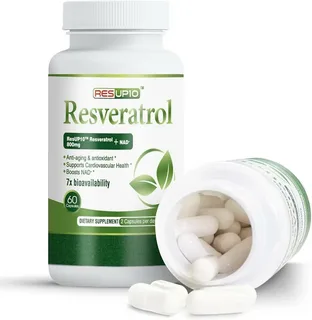
Walk down the longevity aisle, or scroll a few online listings, and the labels start to blur. One bottle leads with a large headline number. Another lists a blend with a single total. A third promises “support” for something without saying how much of any ingredient you get. When a combination product states only a combined amount, you can’t easily tell what each ingredient contributes, and that makes like-for-like comparison close to impossible.
Price adds another layer. A bottle that looks cheaper may last half as long as another, and serve sizes vary from one capsule to several.
This guide offers five questions to ask before you buy, covering what’s in a serve, how the format works, and what a day of supplementation really costs. Each one relies on what the label states, not on the claims around it.
Why NAD+ Became a Supplement Talking Point
NAD+ comes up often in longevity conversations, and the explanation usually runs the same way. One retailer’s product copy says cells use NAD+ to turn food into energy and to keep up DNA repair, and that NMN supplies a building block the body can use to make more of it. That is the pitch in a sentence, and it’s worth reading as exactly that: retailer-stated copy, not independent evidence.
The distinction matters because a tidy biological explanation can sound like a proven benefit. Saying a molecule is involved in energy metabolism is a different claim from saying that taking a capsule produces a noticeable or lasting result. Phrases like “stands guard” or “supports healthy ageing” are marketing language. They tell you what the brand wants you to picture, not what a human study has measured.
Before relying on any outcome claim, look for independent human research and read what it actually tested, including doses, duration and participants. Check, too, how NMN products are regulated in Australia, since that’s not something a product page can settle for you.
For label reading, none of this changes the task. Whatever the story, the numbers on the bottle are what you’re buying.
Question 1 and 2: What Is Actually in One Serve?
Question 1: What counts as one serve? Start with the serve size, because every other number depends on it. A label might quote milligrams per capsule, per serve or per bottle, and these are easy to mix up. One retailer-listed NMN and resveratrol product states its dose as two capsules, which together provide 1,100mg. That figure describes the whole serve, not each capsule.
Question 2: Is each ingredient listed separately? Here the wording matters. On that product, the 1,100mg is stated as NMN and trans-resveratrol combined. The listing doesn’t break the total into two figures, so you can’t tell from it how much of the 1,100mg is NMN and how much is resveratrol. Two bottles could both say “1,100mg” and contain quite different ratios. The headline number only works as a comparison point when you know what it covers.
If a label gives only a combined total, check whether a full breakdown appears on the supplement facts panel or the manufacturer’s page. If it doesn’t, you can’t compare it with a product that lists each amount separately.
Then look at the extras. The same product also contains BioPerine, described as a black pepper extract. Added ingredients like this are easy to skim past, yet they are part of what you’re taking. Note what each one is, whether an amount is stated, and whether it’s something you’d want to raise with a pharmacist or doctor.
Question 3 and 4: Fixed Blend or Separate Doses?
Question 3: Is it a fixed blend or separate products? A fixed-dose NMN and resveratrol supplement is easy to take, but the label shows only the combined amount. In this example, two capsules supply 1,100mg of NMN and trans-resveratrol together, so you can’t tell how that splits between the two. Separate products reverse the trade-off. The same retailer lists an NMN 500mg bottle and a trans-resveratrol 1200mg bottle, each with its own stated amount. You get clearer numbers and the option to buy one ingredient without the other, at the cost of managing two bottles.
Question 4: How do bottle life and daily cost compare? Using the retailer’s listed figures, the one-bottle option is $49.99 for 30 days at two capsules a day, or about $1.67 a day. The two-bottle pairing is listed at $59.99 each. The NMN bottle lasts 90 days at one capsule daily, while the resveratrol lasts 45 days at two daily, which puts the combined daily cost around $2.00. Check those prices before you buy, because they can change.
This isn’t a like-for-like comparison. The separate products list different amounts from the fixed blend, so a cheaper day isn’t automatically better value. The pairing also has a practical wrinkle: the resveratrol runs out at day 45, while the NMN keeps going to day 90. You’ll be reordering on two schedules, and the daily cost will shift whenever one bottle runs out.
Simplicity, flexibility and cost per day pull in different directions, so decide which matters most to you before you compare.
Question 5: Doing the Value Maths
Cost per day is simple: divide the price by the number of days the bottle lasts at the labelled serve. Using the retailer’s listed figures, a $49.99 bottle that lasts 30 days at two capsules daily works out to about $1.67 a day. The separate-product option lists NMN at $59.99 for 90 days (about $0.67 a day) and resveratrol at $59.99 for 45 days (about $1.33 a day). Together, that’s roughly $2.00 a day while both bottles are running. Prices change, so confirm them at checkout.
Then look past the first bottle. Products in a stack rarely finish together, so your daily cost shifts every time one runs out and you reorder. The three-bottle stack on the same page includes a TMG bottle that lasts only 30 days, so it runs out first.
A cleaner comparison is total spend over a fixed window, such as 90 days, divided by 90. It treats every option the same way, however its bottles are staggered.
Conclusion
Before you buy, run the same five questions over every label: what is in one serve, whether the doses are combined or listed individually, whether a fixed blend or separate products suits you, what each option costs per day, and how that holds up over a fixed window like 90 days. Broad promises tell you little; the label tells you more. Since a supplement’s suitability depends on your own health, medications and goals, it’s worth talking it through with your GP or pharmacist before committing.