



Hair loss is a condition that transcends simple aesthetics; for many, it impacts self-esteem, social interactions, and professional confidence. While various topical treatments and medications exist, the most definitive and long-lasting solution remains the surgical restoration of hair. As medical technology has evolved,hair transplantation has shifted from the “pluggy” look of the 1980s to a sophisticated microsurgical procedure capable of producing results virtually indistinguishable from natural growth.
Understanding the Biology of Hair Loss
Before diving into the procedures, it is essential to understand why hair transplants work. Most cases of male and female pattern baldness are caused by androgenetic alopecia. This condition is driven by a sensitivity to dihydrotestosterone (DHT), a byproduct of testosterone that causes hair follicles on the top and crown of the head to shrink and eventually stop producing hair.
However, hair follicles located at the back and sides of the head are genetically programmed to be resistant to DHT. This “donor dominance” is the foundational principle of hair restoration. When these hardy follicles are moved to thinning areas, they retain their genetic resistance and continue to grow for a lifetime.
The Evolution of Techniques: FUE vs. FUT
The modern era of hair restoration is defined by two primary methods of follicle extraction. Choosing the right one depends on the patient’s scalp elasticity, the extent of hair loss, and their preferred hairstyle.
1. Follicular Unit Extraction (FUE)
FUE is currently the gold standard for patients seeking a minimally invasive approach. In this method, individual follicular units (groups of 1 to 4 hairs) are extracted one by one using a specialized micro-punch tool.
- Advantages: No linear scarring, faster recovery time, and the ability to wear hair very short.
- Ideal for: Younger patients or those who only require a moderate number of grafts.
2. Follicular Unit Transplantation (FUT)
Often referred to as the “strip method,” FUT involves removing a small strip of tissue from the donor area. The strip is then dissected under high-powered microscopes into individual grafts.
- Advantages: Typically allows for a higher yield of grafts in a single session and is often more cost-effective for extensive balding.
- Ideal for: Patients requiring maximum density who do not plan on wearing their hair buzzed.
At premier facilities likeGold City, specialists evaluate the patient’s unique hair characteristics to determine which methodology will yield the most natural density and coverage.
The Surgical Journey: What to Expect
A successfulHair transplant is a meticulous process that requires both surgical precision and an artistic eye for hairline design.
Phase 1: Design and Local Anesthesia
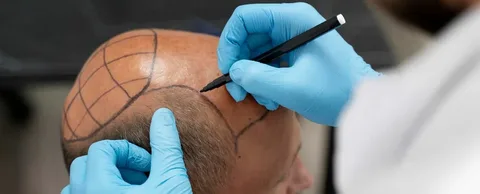
The surgeon begins by mapping out the new hairline. This is a critical step; a hairline that is too low or too straight can look artificial as the patient ages. Once the design is agreed upon, the scalp is numbed using local anesthesia, ensuring the patient remains comfortable throughout the 4-to-8-hour procedure.
Phase 2: Extraction and Site Creation
While the grafts are being harvested and preserved in a nutrient-rich solution, the surgeon creates “recipient sites.” These are tiny incisions where the new hair will be placed. The angle, depth, and direction of these incisions are paramount; they must mimic the natural flow of the surrounding hair to ensure a seamless blend.
Phase 3: Implantation
The final stage involves the delicate placement of the follicles into the recipient sites. This is often performed by a team of highly trained technicians who ensure that single-hair grafts are used at the very front of the hairline for softness, while multi-hair grafts are used further back for volume.
Recovery and the “Ugly Duckling” Phase
Post-operative care is vital for graft survival. Most patients can return to sedentary work within 2 to 5 days, though strenuous exercise should be avoided for at least two weeks.
One aspect patients must be prepared for is “shock loss.” Roughly 2 to 4 weeks after the procedure, the transplanted hair shafts will fall out. This is a normal part of the process—the follicles are entering a resting phase before beginning new growth. This period is often affectionately called the “ugly duckling” phase, but it is temporary. By month four, new growth begins to break through the surface, with full results typically visible between 12 and 18 months.
Advancements in the Field: DHI and Sapphire FUE
The industry continues to innovate to improve graft survival rates and reduce healing times.
- Sapphire FUE: Instead of steel blades, surgeons use blades made from synthetic sapphire. These are sharper and more durable, allowing for even smaller incisions and less tissue trauma.
- DHI (Direct Hair Implantation): This technique uses a specialized “Choi Pen” to extract and implant the follicle simultaneously, reducing the time the graft spends outside the body.
Choosing the Right Clinic
The success of a hair restoration procedure is heavily dependent on the experience of the surgical team. Prospective patients should look for clinics that prioritize patient education, provide transparent graft counts, and have a proven track record of natural-looking hairlines.
Beyond the technical skill, the environment and aftercare support are pillars of a positive experience. Institutions that integrate modern technology with a patient-centric approach ensure that the journey from hair loss to hair restoration is as smooth as possible.
Restoring one’s hair is more than a medical procedure; it is a long-term investment in one’s self-image. With the right technique and expert execution, the results are not just permanent—they are life-changing.
