



Having an app idea is exciting, but an idea alone is not a product. Turning a concept into a working mobile application requires careful validation, planning, design, development, testing, launch preparation, and continuous improvement. A structured product-development process helps reduce unnecessary costs while making sure the final app solves a genuine user problem.
Contents
ToggleStart by Defining the Problem
The first step is to clearly identify the problem your app is supposed to solve. Instead of beginning with a long list of features, describe the user’s challenge in simple terms. Ask who experiences the problem, how frequently it occurs, what solutions people currently use, and why those solutions are not sufficient.
A strong problem statement gives the entire project direction. It also prevents developers from spending time building features that look interesting but do not provide meaningful value.
Identify Your Target Users
An app cannot be designed effectively for “everyone.” Define the specific group of people most likely to benefit from the product. Consider their needs, behaviors, expectations, technical comfort, and reasons for using the application.
Understanding your target audience also helps determine the right interface, communication style, pricing strategy, and feature priorities. User interviews, surveys, observation, and competitor analysis can help uncover valuable insights before development begins.
Validate the App Idea Before Building It
One of the most important steps is determining whether people actually want the solution. Validation does not necessarily require a functioning application. You can use interviews, surveys, landing pages, demonstrations, clickable prototypes, or other low-cost experiments to test your assumptions.
The objective is to discover weaknesses early. If users do not understand the concept or do not consider the problem important, it is much easier to change the idea before significant development money has been spent.
Research Competitors and Existing Solutions
Your app does not exist in isolation. Research similar applications and alternative ways users currently solve the problem. Look at their features, user experience, pricing, reviews, strengths, and weaknesses.
Competitive research can reveal opportunities for differentiation. Perhaps existing apps are difficult to navigate, lack an important feature, target the wrong audience, or provide poor customer support. Your product can use these gaps to create a clearer value proposition.
Define the Minimum Viable Product
Once the idea has been validated, decide what the first version actually needs. This is where the concept of a Minimum Viable Product, or MVP, becomes important. An MVP should contain enough functionality to deliver the core value and generate useful feedback without attempting to include every possible feature.
For example, imagine an app designed to connect local tutors with students. The first version might need account creation, tutor profiles, search, booking, messaging, and payment functionality. Advanced recommendations, loyalty programs, social features, and complex analytics could potentially wait for later releases.
A focused MVP makes development easier to manage and gives the team an opportunity to learn from real users.
Create User Flows and Wireframes
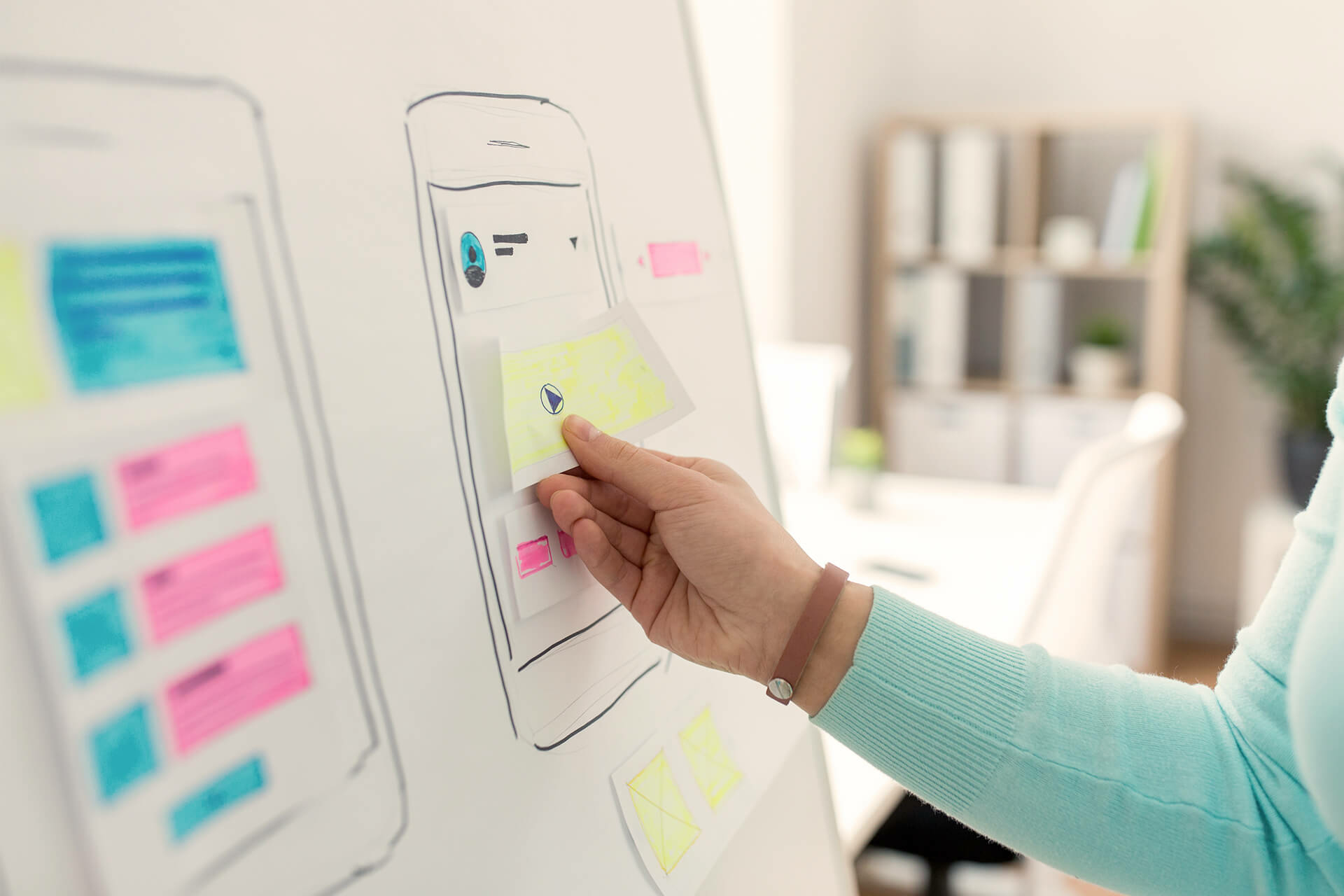
Before writing substantial amounts of code, map out how users will move through the application. A user flow might begin with registration and continue through searching, selecting an option, completing an action, and receiving confirmation.
Wireframes can then represent the basic structure of each screen. At this stage, the goal is not visual perfection. It is to determine whether the navigation makes sense and whether users can complete important tasks without confusion.
Build an Interactive Prototype
A clickable prototype can make an app concept much easier to evaluate. Instead of simply looking at individual screen designs, stakeholders and potential users can experience how screens connect and how important actions work.
Testing a prototype before development can reveal confusing navigation, missing steps, or unnecessary features while changes are still relatively inexpensive. Prototyping and validation are recognized parts of modern product-development workflows.
Choose the Right Technology
The technology behind the application should support its requirements rather than simply follow the latest trend. Decisions may include whether to develop for iOS, Android, or both; whether to use native or cross-platform development; what backend architecture is appropriate; and which databases, APIs, cloud services, and third-party integrations are needed.
Technical planning should also consider scalability, security, performance, maintenance, and future expansion. A seemingly inexpensive technical choice can become costly if it makes future improvements difficult.
Work With the Right Development Team
Turning a validated concept into production software requires more than coding. Depending on the project, a team may include product managers, UX/UI designers, mobile developers, backend developers, quality-assurance specialists, and other technical professionals.
Choosing experienced professional mobile app development support can be particularly valuable when an app involves complex functionality, integrations, security requirements, payments, user accounts, or plans for significant growth. A capable team can translate business requirements into technical specifications while helping identify potential problems before they become expensive.
Develop the App in Manageable Stages
Development should generally happen in smaller, testable increments rather than waiting until every feature has been completed. Agile-style development commonly uses short iterations or sprints, allowing teams to review progress and make adjustments as the product develops.
The first development cycles should concentrate on the primary user journey. Once the core experience works, additional functionality can be introduced according to priority.
Regular demonstrations are also useful because they allow stakeholders to compare the actual product with the original requirements.
Prioritize Security From the Beginning
Security should not be treated as a final-stage feature. Applications that collect personal information, payment details, location data, or other sensitive information need appropriate safeguards throughout development.
Security considerations can include secure authentication, proper authorization, encrypted communications, safe data storage, secure API design, dependency management, and careful handling of user information.
Building security into the architecture from the beginning is generally more effective than attempting to repair fundamental weaknesses after launch.
Test the Product Thoroughly
Testing is essential before an app reaches a large audience. Functional testing checks whether features work as intended, while usability testing evaluates whether people can understand and navigate the application.
Other areas may include performance testing, compatibility testing across devices and operating systems, accessibility testing, security testing, and regression testing. Testing with real users can also expose problems that internal teams may overlook.
A beta release can provide another valuable layer of feedback before a broader public launch.
Launch With a Clear Plan
A finished application still needs a thoughtful launch strategy. Prepare the necessary app-store materials, descriptions, screenshots, onboarding experience, customer-support process, analytics, and marketing assets.
It can be useful to launch to a limited group first rather than immediately targeting the largest possible audience. Early users can reveal technical problems and behavioral patterns that were not visible during development.
Measure What Happens After Launch
Launch day is not the end of product development. It is the beginning of the next learning cycle.
Monitor meaningful indicators such as activation, retention, feature usage, task completion, conversion, crashes, customer feedback, and revenue where applicable. These measurements can show whether the app is actually delivering value rather than simply attracting downloads.
Post-launch product development is inherently iterative: teams learn from users, prioritize improvements, release updates, and continue refining the experience.
Common Mistakes to Avoid
Several mistakes can make an app project unnecessarily expensive or difficult. Building too many features before validating the idea is one of the most common. Other problems include ignoring user research, choosing technology without considering long-term requirements, underestimating testing, overlooking security, and failing to define measurable goals.
Another mistake is treating the first version as the final version. A successful app usually evolves as its users, market, technology, and business objectives change.
A Simple Idea-to-Product Roadmap
The complete journey can be summarized as:
Idea → Problem Definition → User Research → Validation → MVP Scope → Wireframes → Prototype → Technical Planning → Development → Testing → Beta Release → Launch → Measurement → Improvement
The process is not always perfectly linear. Feedback may send the team back to an earlier stage to change the design, scope, or even the original concept. That flexibility is a strength rather than a weakness because product development is ultimately a learning process.
Conclusion
Turning an app idea into a working product requires much more than writing code. The strongest approach begins by understanding the problem and the people experiencing it, validates the concept, defines a focused MVP, creates and tests the user experience, selects appropriate technology, and then develops the application in manageable stages.
Professional development can help transform a promising concept into a reliable, scalable, and user-friendly product. Most importantly, the process should continue after launch: listen to users, study real-world behavior, fix problems, and improve the application based on evidence. With thoughtful planning and disciplined execution, a simple app idea can develop into a product capable of creating lasting value.