



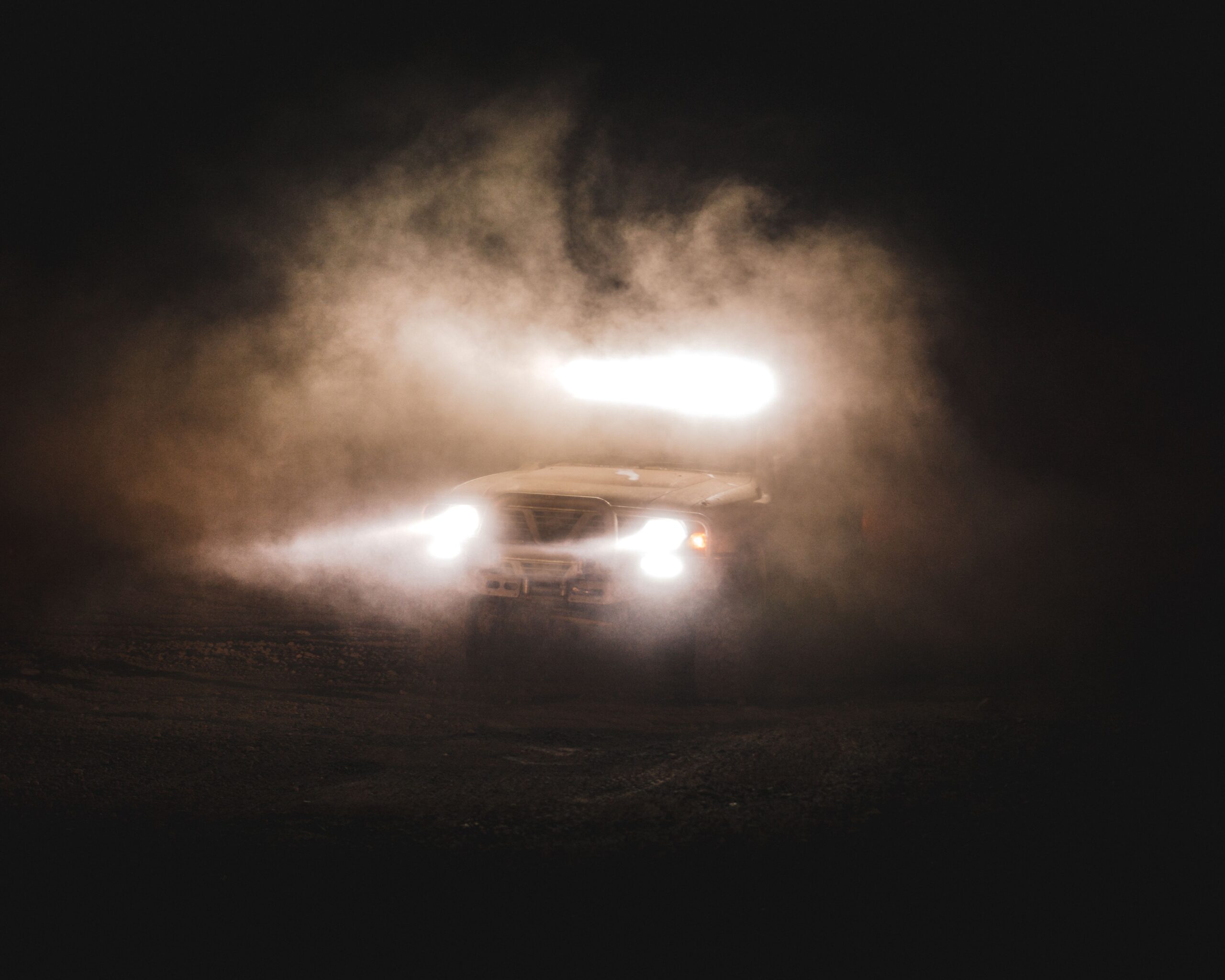
Leaving the paved highway behind introduces a vehicle to punishing conditions where standard equipment quickly shatters under trail abuse. When the sun drops, navigating deep ruts requires absolute visual clarity, making sub-par lighting a serious hazard. Investing in premium equipment ensures the adventure does not halt when the environment turns hostile. True enthusiasts prioritize rugged gear that balances brute strength with advanced optic performance to master the dark. When the forward view is perfectly illuminated, drivers can navigate unpredictable terrain with total confidence.
Battling the Destructive Forces of Trail Dust
Fine silt and airborne dust pose a constant threat to forward visibility and internal electronics on dry trails. When driving in a convoy or tackling sandy desert washes, a vehicle is enveloped in a thick cloud of abrasive particles. Cheaply made housings often feature tiny imperfections in their seals that allow these minuscule grains to slip inside. Once dust settles on the inner lens, it creates a hazy film that permanently degrades the total light output.
Advanced lighting systems combat this environmental hazard by utilizing precision-molded silicone gaskets and airtight housing designs. These protective barriers keep the internal reflectors completely pristine regardless of how much dirt kicks up from the tires. Drivers can stay on the trail for hours without worrying about their beam fading or becoming distorted by internal debris. Keeping the interior completely isolated ensures that the optics remain as bright as the day they were installed.
Submerging Into Deep Water and Mud
Muddy water crossings present another severe challenge that can instantly ruin poorly sealed electronics. Plunging into a deep creek or speeding through rain-soaked bogs creates immense exterior pressure against the light housing. If water breaches the outer shell, it causes immediate electrical short circuits and permanently destroys the internal circuit boards.
Furthermore, the trapped moisture creates permanent condensation that ruins the clarity of the lens even after the vehicle dries out. High-grade auxiliary lights prevent this frustration by earning superior waterproof certifications through rigorous laboratory testing. Manufacturers submerge the hardware for extended periods to ensure that no moisture can bypass the specialized seals.
This level of protection allows off-roaders to tackle deep riverbeds and sudden downpours without a single moment of hesitation. Knowing the equipment is entirely waterproof brings incredible peace of mind when exploring remote backcountry areas. This reliability keeps the path ahead clear no matter how wet the trail becomes.
Surviving Continuous Vibration and Severe Impacts
The constant chatter of washboard roads and violent impacts from rocky trails can easily vibrate a fragile light to pieces. Lesser components often suffer from broken internal wires or cracked mounting brackets after just a few miles of intense shaking. When hardware faces these rhythmic shockwaves, cheap soldering joints snap and cause total electrical failure. A dependable lighting system must be built tough to survive these relentless forces.
Rugged aluminum housings and reinforced polycarbonate lenses provide the structural integrity needed to survive these brutal conditions. For instance, drivers researching high-end options like c23 lights often look for robust mounting hardware that locks the beam firmly in place. This heavy-duty construction absorbs the energy from low-hanging branches and flying gravel without shifting or fracturing. Eliminating these structural weak points keeps the trail perfectly illuminated when the ride gets incredibly rough.
Dispersing Extreme Heat for Long-Term Reliability
High-powered LEDs generate significant internal heat that must be managed properly to prevent premature failure. If this thermal energy builds up inside the housing, it degrades bulb efficiency and shortens operational lifespan. Quality engineering solves this problem by integrating deep cooling fins directly into the back of the metal structure. This smart design draws damaging heat away from sensitive electronics and releases it safely into the passing air.
Effective heat management lets the system run at max brightness without dimming. Drivers can rely on a consistent beam during long overnight journeys without performance drops. This thermal stability protects the investment and ensures long-term reliability, making internal heat management just as vital as defending against external hazards.
Matching Beam Patterns to Unpredictable Environments
Different trail conditions require specific illumination to keep drivers safe at various speeds. High-speed desert running requires a concentrated spot beam that throws light far down the trail to spot obstacles early. Conversely, tight technical rock crawling demands a wide flood pattern that illuminates the immediate sides of the vehicle.
Combining these distinct patterns creates a wall of light that eliminates dangerous blind spots around the tires. Modern advancements allow drivers to adapt their lighting coverage on the fly to match changing terrain conditions. This versatility means a single vehicle transitions seamlessly from tight forest tracks to wide-open valley floors.
The adaptive coverage reduces eye strain by eliminating harsh glare and providing smooth illumination exactly where it is needed most. Customizing the field of view maximizes safety and enjoyment during demanding nighttime adventures. This flexibility ensures complete confidence on any trail.
Conclusion
Conquering the most demanding off-road trails requires auxiliary lighting that can easily defeat relentless trail vibration alongside harsh environmental elements. Prioritizing rugged build quality and advanced environmental sealing protects the vehicle from sudden electrical failures in remote areas. Investing in durable hardware ensures that the forward view remains perfectly clear through deep mud and blinding dust storms. By choosing equipment built for severe duty, off-road enthusiasts can focus on the thrill of exploration with total confidence.